
How to Talk about Race: Eric Deggans at TEDxBloomington
Despite having elected a black president, says Eric Deggans, the conversation about race in America is just beginning — but it's vital that we not shy away from it. Deggans, TV/Media Critic for the Tampa Bay Times, also provides freelance commentaries on television for National Public Radio and writes on sports media issues for the National Sports Journalism Center at Indiana University. He is also the author of "Race-Baiter: How the Media Wields Dangerous Words to Divide a Nation," a look at how prejudice, racism and sexism fuel some elements of modern media, published in October 2012 by Palgrave Macmillan. Now serving as chair of the Media Monitoring Committee for the National Association of Black Journalists, Deggans has also served on the board of directors for the national Television Critics Association.
3.) Key Principles for Talking About Race
Nobody "Owns" the Issue: White individuals also have a racial culture and equal stake in the conversation.
Talking About Race doesn’t equal Racism: Raising racial issues isn't "race-baiting,” it's pointing out existing hazards to prevent harm.
Don't Wait for a Crisis: Discussing race only during headline tragedies leads to anger and polarization rather than open-mindedness.
Revisiting "Horizontal Segregation": Historically, segregation targeted spaces where people sat together (like restaurants and churches) to prevent equal connection. Today, the challenge is learning how to "sit together" in a digital era.
4.) Reframing How We Think About Bias
Move Beyond the "Bigot" Myth: Bias and stereotypes aren't exclusive to extreme bigots; anyone can fall into biased thinking.
Use Precise Vocabulary: Instead of relying solely on heavy terms like "racism," use lower-level terms like bias, prejudice, stereotypes, or discomfort to foster productive dialogue.
The Beginning, Not the End: Major milestones (such as electing a Black president) do not end the conversation on race. Instead, they signal that the ongoing conversation is just getting started.
Summary of TEDx with Eric Deggans
1.) The Persistence of Prejudice
Personal Experience: Reflecting on his time at Indiana University, Deggans highlights experiencing racial slurs annually, showing that prejudice exists even in progressive community spaces.
The Goal: Shifting race from a background, implicit thought to an open conversation—even if it feels uncomfortable.
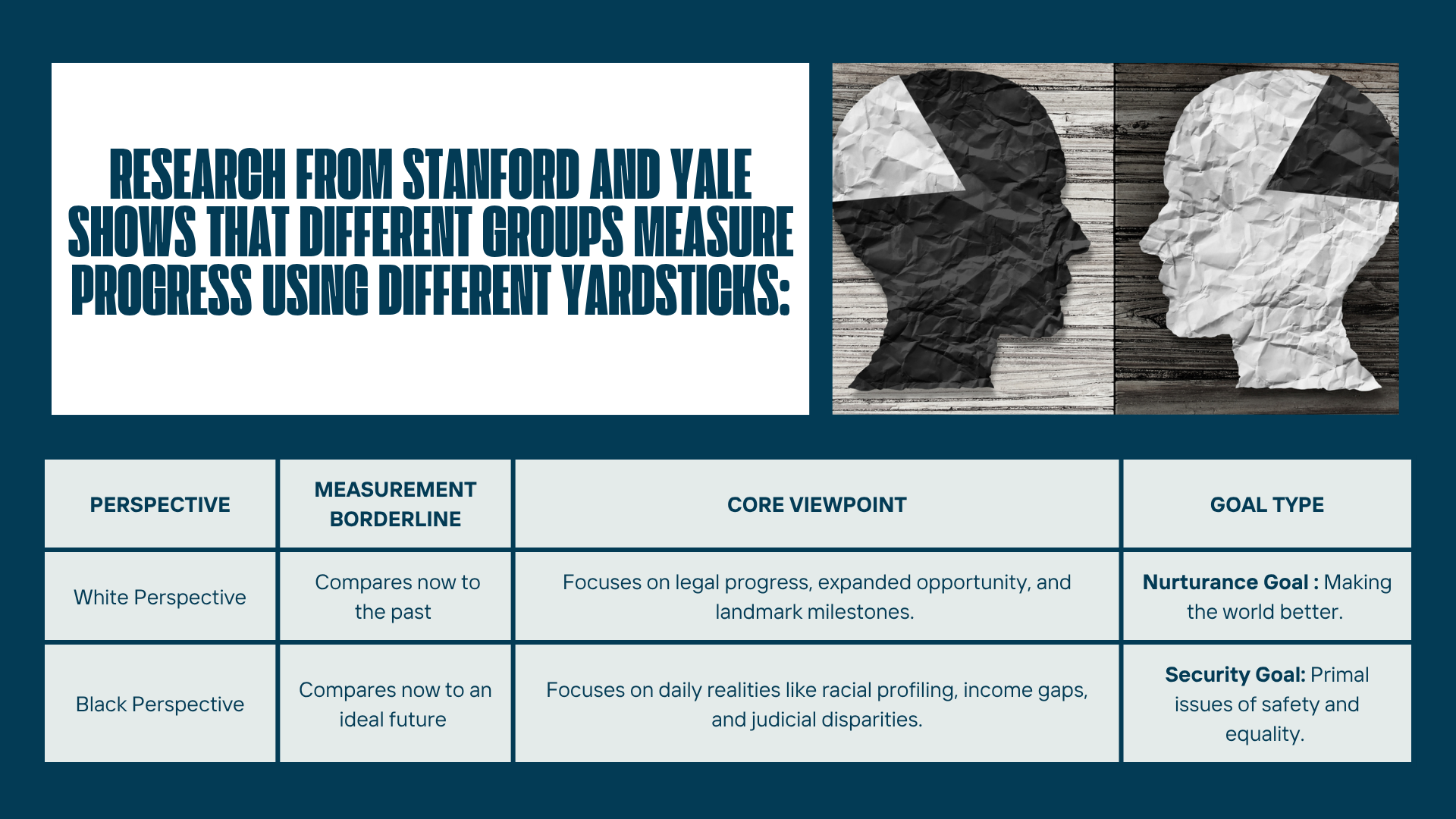
2.) Why We View Racial Progress Differently
A Time for Action: A Five-Part Strategy to Dismantle Racism
Racism remains an active, destructive force in America. Passive progress is not enough—without intentional forward movement, society naturally moves backward. Dismantling racism requires moving beyond "business as usual" to adopt an active anti-racist strategy.
The 5 Affirmations for Dismantling Racism
Adopt a Historical Perspective (Not Just an Individual One)
America was built as a white-dominant society through the enslavement and near-genocide of marginalized groups.
Civil rights legislation alone did not wipe away the lingering structural impacts of historical inequality.Focus on Systemic Racism (Not Just Personal Bias)
Racism is about the power to dominate and enforce oppression through institutions.
It manifests in economic gaps, political structures, segregated educational systems, and unequal access to healthcare and housing. Simply trying to "get along" on an individual level will not fix systemic barriers.
Tell the Truth and Stop the Denial
White individuals in America benefit from a system of inherited power and privilege regardless of whether they hold personal racial prejudice.
True progress starts by acknowledging this systemic reality.Be Color-Conscious and Not Colorblind
Saying "I don't see color" erases a person's unique history, culture, pain, and lived experience.
A healthy multicultural society values cultural identity rather than forcing assimilation or sameness.Start Change Within Systems and Institutions we are a part of.
Superficial exchanges alone are insufficient.
Real change requires a total paradigm shift across all levels of organizational life — starting with faith communities and institutions — to reshape them into truly multicultural spaces.
Spiritual Calling
From a faith perspective, racism directly contradicts the gospel message of reconciliation. Addressing it requires both social and spiritual transformation, ultimately rejecting allegiance to systems of division, classism, or nationalism, and standing grounded in a higher moral commitment to justice.